Epoxy bearings with West System 423
This article covers my experience making epoxy bearing pads in a rudder tube. It’s a loose collection of notes that I wish I had before I started. One of the most important parts here is that I had never seen any good pictures or illustrations of what the finished repair should look like, so I did the work on faith. You can thank me later.
The context
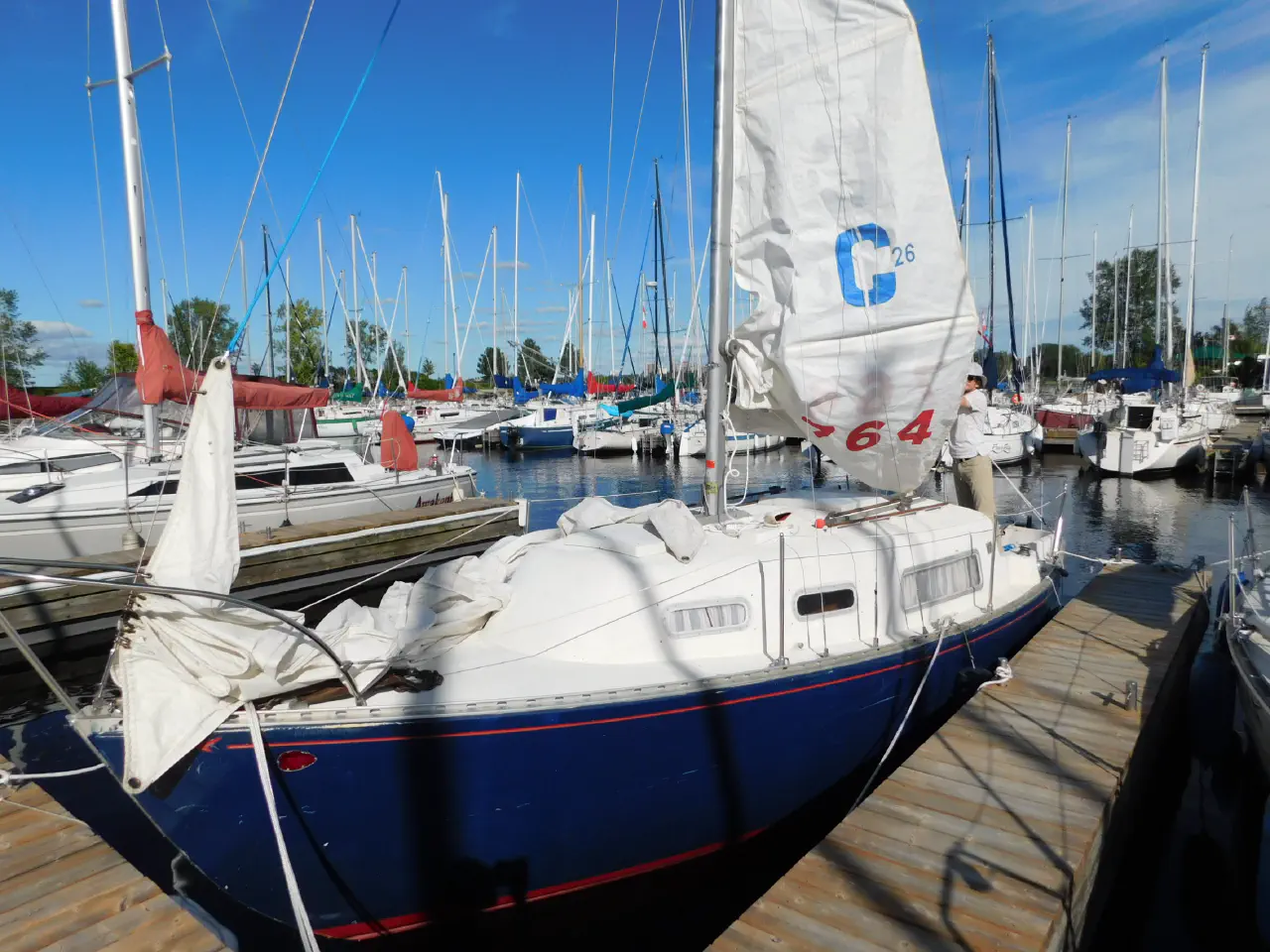
I sail a Grampian 26 and most of these boats use pressed-in acetal bearings to support the rudder shaft. After sailing it for a couple of years mine went from “sort of ok” to pretty sloppy to the point of affecting my ability to keep a course. I started looking at how I could address the issue.
The recipe
Long story short, I settled on the approach suggested by West System in Fiberglass Boat Repair & Maintenance1 and it worked fantastically. I used West System 105 resin with the 205 fast hardener, eyeballed the amount of graphite powder (423) and used a syringe as suggested.
For the release agent I used MG Chemicals 8329. Be sure to read the safety datasheet, it’s pretty nasty stuff. Lots of skulls on the can. Using wax like West System recommends is probably fine too.
Dos and don’ts
From the pictures you’ll see that I also eyeballed the placement of the holes I drilled since the guide has poor recommendations on that front. It worked out fine (and steers great now) but if I were to do it again I would ensure the following:
- Make yourself a clamping circle jig to mark the rudder tube and ensure the jig is level with the boat.
- There should be exactly three holes.
- The three holes should really be equidistant, use a fabric tape around the rudder tube to measure.
Beyond that, here’s what worked for me:
- I tested the epoxy-graphite mixture and the release agent. Do it, multiple times. I used 3D printed receptacles and 316 stainless fasteners to get a sense. You’ll get a feel for the viscosity and how to handle the graphite, and you’ll confirm whether your choice of release agent works. It’s a simple project but the pucker factor of gluing your rudder shaft in the tube is just off the charts.
- Mix the expoy just a bit runnier than you’d like. You will spill some however hard you try, but at least it’s going to go down the tube easy. Don’t even hope to be able to “plug” the hole with the syringe to force it in. It won’t work.
- Use a drill guide, drilling round things is difficult. A piece of two-by clamped to the tube worked for me, but a 3D printed jig sized to your rudder tube would be best.
- I drilled the holes “pointing down” towards the inside of the tube. It helped marginally with spilling. Well, it made me feel better.
- A hydraulic car jack made lifting and lowering the rudder in place uneventful. That worked really well.
- I applied fiberglass tape over the holes because it’s not paranoia if they’re out to get you. I did it on a different day, but you could do it at the same time if you feel very brave.
A couple more warnings
Be wary, 423 mixed into epoxy will stain anything it possibly can. I had to do this double or triple gloved. Have an open trash can (not just a bag) nearby to collect contaminated items. You may think that you can clean the resin with acetone, but let me tell you the graphite powder does not care at all whether you do or not. Be extremely careful and cover everything, that stuff is serious business. It will get in literally any microscopic crack it can.
Don’t be greedy: while you’ll likely want to remove the rudder shaft as soon as the resin is just past green stage (hard but not fully cured), don’t try to put the rudder back in to see if it fits. Wait for proper full cure, 24 to 72 hours depending on your hardener-resin combo. I nicked the epoxy trying to force the rudder back in (using a car jack will do that). It’s likely not the end of the world, but if you can avoid it, do.
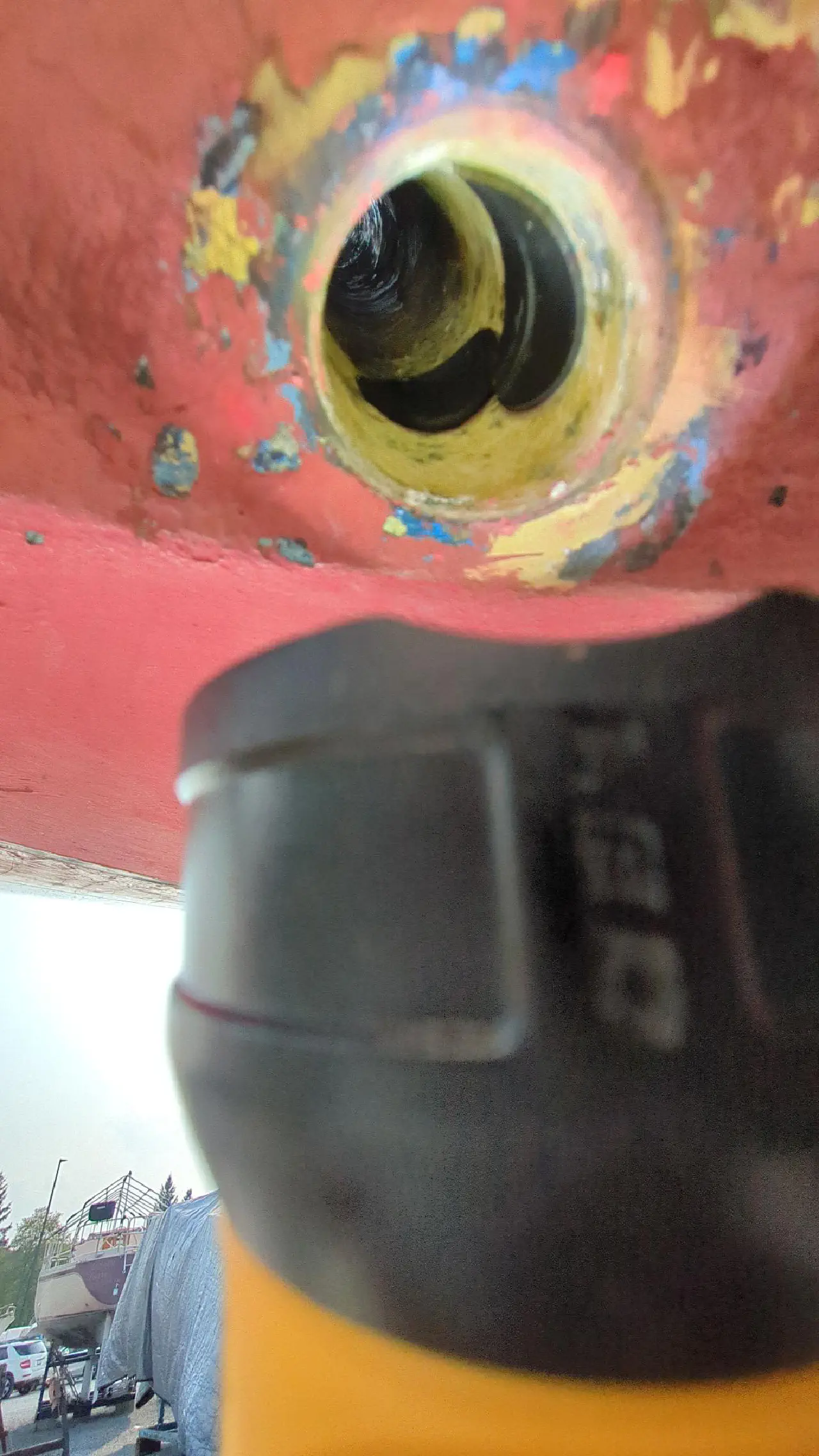
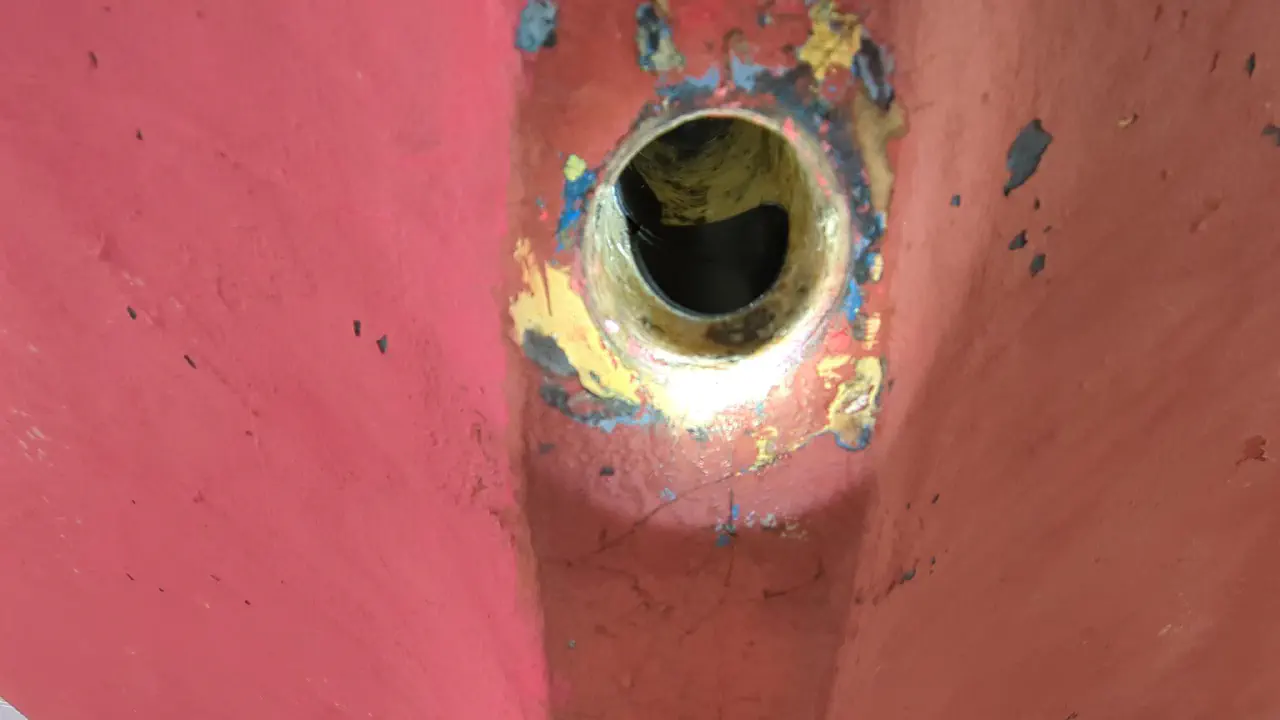
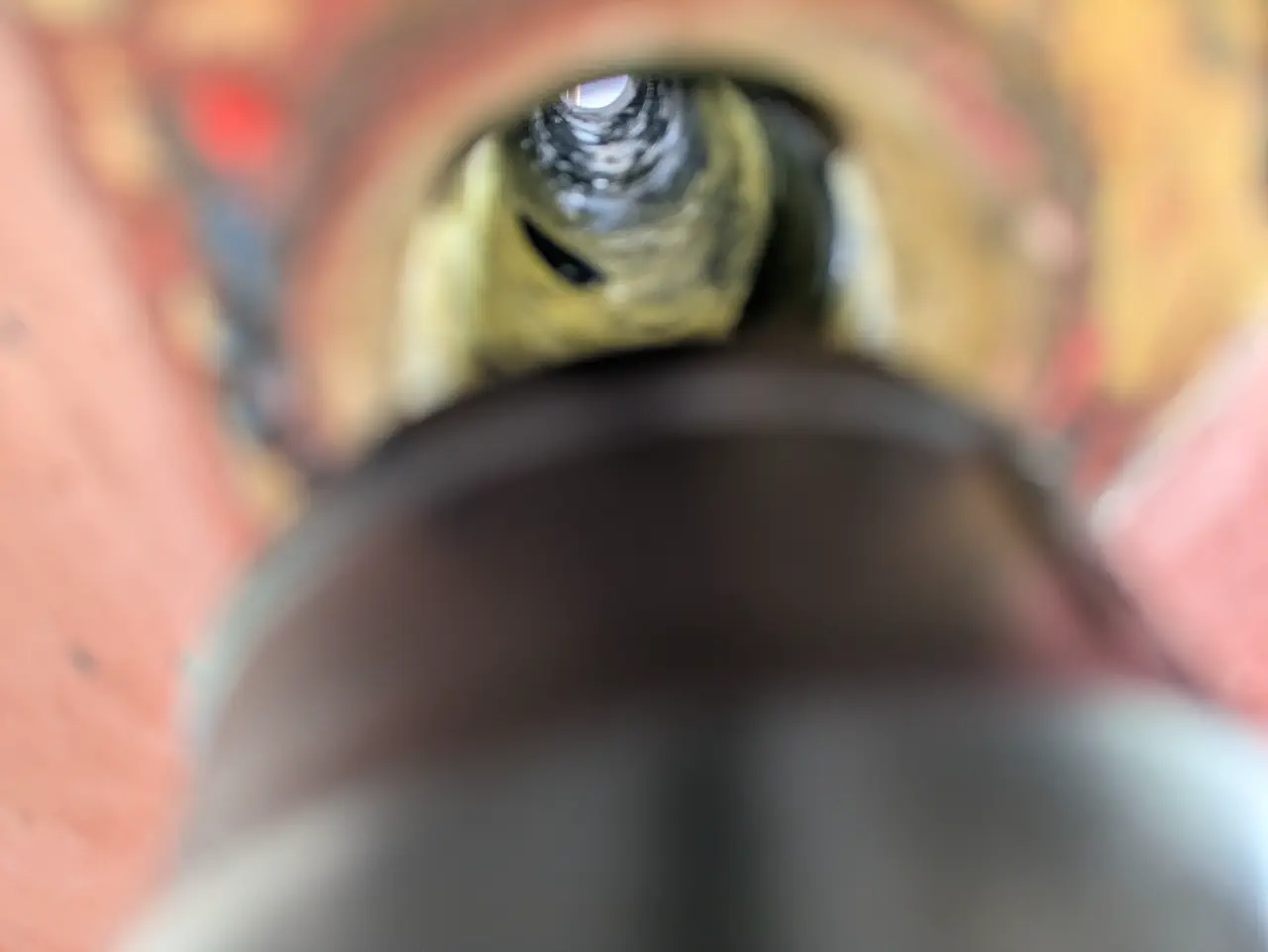
The pictures below show the result. The epoxy is very likely to form a sharp edge because of surface tension. You may want to sand or grind that edge with something like a rotary tool to make inserting the rudder back in a bit easier.
-
Gougeon Brothers, Inc. (2014). Fiberglass boat repair & maintenance (Manual No. 002-550) (1st ed.). ↩︎